
Buying a Lakefront Home on Table Rock Lake: Dock Permits, Corps Rules and Hidden Costs
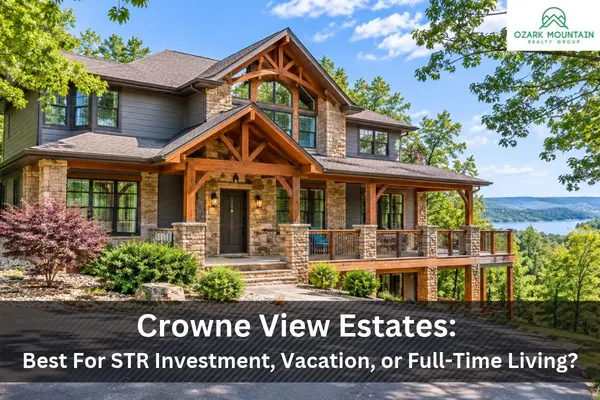
Picture a slow morning on the deck, coffee in hand, with Table Rock Lake glowing right in front of you is always a dream of every homeowner. It's an easy image to fall for. But before you make an offer, there's a catch that surprises a lot of buyers. A "Lakefront" home here rarely means you own the land all the way down to the water. The lake is managed by the U.S. Army Corps of Engineers, and that changes the rules on trees, docks, and even where you can park your truck.
A little research up front goes a long way if you are looking at homes in Branson for sale with water views. It protects your wallet and your peace of mind further. So, before making an offer, get familiar with Corps regulations, dock permitting, and the real costs hiding behind those glossy listing photos.
Who Really Owns the Shoreline?
Spanning roughly 840 miles of winding coves and bluffs, Table Rock Lake falls under the watchful stewardship of the U.S. Army Corps of Engineers’ Little Rock District. For homeowners here, the water’s edge isn't where private ownership ends; that boundary is drawn slightly higher on the bank, along a strip of government land locals know as the "take line."
Building along these shores requires navigating strict zoning designations. A mere 12% of the coastline is set aside for Limited Development, marking the only stretches where private or community docks can be permitted. Conversely, roughly 71.5% is preserved as Protected Shoreline, leaving dock construction entirely out of the question.
Beyond the take line lies another invisible boundary: the flowage easement. Because the government retains overflow rights up to 936 feet above mean sea level, any land resting below that elevation comes with strict rules. You cannot build living quarters, install waste systems, or alter the natural contour of the earth.
The "No Touch" Rules
Without written permission, you can't clear trees, mow, grade, build a walkway, carve out a little beach, or park a vehicle on Corps land. Even cutting down one cedar for a better view can lead to hefty federal fines.
You can apply for a Vegetation Modification Permit, which costs $10 and lasts five years. It's pretty narrow, though. It covers underbrush under 2 inches thick and cedars under 3 inches, and only within 200 feet of a habitable structure. Flowering trees like dogwoods and redbuds are protected.
One more thing that catches people off guard: the strip in front of your house is public land. Neighbors and boaters may wander through it, so don't expect it to act like a private backyard.
Dock Permits: Where Buyers Get Caught Out
Docks drive value on Table Rock Lake. Local talk suggests a single slip can add somewhere around $75,000 to $125,000 to a home's price, though it varies a lot by cove and condition. But the rules are strict, and this is where many buyers trip up.
Permits don't simply come with the house. Shoreline Use Permits are non-transferable. After a sale, the new owner has to apply to the Table Rock Lake Project Office for a permit in their own name.
Expect an inspection. Before a new permit is issued, Corps rangers look the dock over. If the previous owner added an unpermitted storage locker, solar panels or a swim platform, you inherit that problem and may have to pay to fix or remove it.
Slip limits are tight. One person can't hold more than one boat dock. A family unit is limited to two single slips across the whole lake. The boat owner must also own the slip, and private slips can't be rented to vacationers or anyone else.
New docks are hard to get. New stand-alone swim docks and mooring buoys are prohibited. A newly approved dock has to be a community dock with 12 to 20 slips. It can't stretch beyond one-third of the cove width and needs a 100-foot buffer from existing docks. So buying a vacant lot and assuming you'll add a private dock is a risky plan.
Community docks aren't automatic. Owning a home near a community dock doesn't guarantee you a slip. Confirm in writing that one is included.
Hidden Costs That Surprise New Lake Owners
A lake house costs more to carry than a typical suburban home. Here's what to budget for.
- Dock upkeep: The permit itself is cheap, about $30 for five years, but keeping a dock in shape is not. The conservation pool sits at 915 feet, and the flood pool can reach 931 feet, so water levels swing. That means adjusting cables, replacing foam flotation, servicing lifts, winterizing, and repairing storm damage.
- Septic and utilities: Municipal water and sewer are rare on rugged lakefront lots. Septic pumping and inspections typically run $200 to $500, while a failed system on a steep lot can top $7,000. Wells, longer roads, and higher utility bills can add up too.
- Insurance: Waterfront homes get closer underwriting. Lenders often require flood coverage even if the home sits above the mapped flood zone. You'll likely want separate liability coverage for docks, lifts, boats, and guests.
- Taxes: Prime frontage can carry higher valuations, which means a bigger tax bill.
- Weather wear: Sun, wind off the water, moisture, and winter freezes are hard on decks, siding, and roofs, so they wear out sooner.
- HOA dues and rental rules: Some communities charge dues or limit short-term rentals. Read the covenants before you fall in love.
Every Cove Is Different
Rules are the same lake-wide, but the details change from spot to spot. Cove depth, slope, septic conditions, and dock access all vary. If you're comparing homes for sale in Branson West, MO, looking into Cape Fair real estate, or checking out Lampe, MO real estate and Ridgedale, MO real estate, each listing needs its own due diligence. A Hollister, MO realtor who knows the nearby shoreline can also help you compare what you're getting for the money.
This is where working with a realtor in Branson who knows the lake really pays off. The team at Ozark Mountain Realty Group, LLC can help you check shoreline rules and dock details before you commit.
Questions to Ask Before You Make an Offer
- Where exactly is the take line on this property?
- Is the dock permitted, and are there any open Corps violations?
- Has anything been added to the dock without approval?
- How deep is the water at the dock in August and in winter?
- Is there a slip included, and is it private or part of a community dock?
- What do insurance and flood coverage cost for this address?
- When was the septic system last inspected and pumped?
- Are there HOA dues or rental limits?
Final Thoughts
Lakefront living on Table Rock Lake is wonderful, and plenty of people find it worth every penny. Just go in with open eyes. Know where your land ends, confirm the dock situation in writing, and budget for the upkeep. When you're ready to start looking, talk to Ozark Mountain Realty Group, LLC to get local guidance before you sign anything.
Frequently Asked Questions
Can I cut trees on my property for a better lake view?
Only on your own land. Anything on Corps land needs a permit, and the Vegetation Modification Permit is quite limited. Ask first, because fines can be steep.
Can I rent out my boat slip with my lake house?
No. Private slips can't be rented to vacation guests or other third parties, and the boat owner must own the slip.
Does the dock permit transfer when I buy the home?
Not automatically. You have to apply for a new permit, and the Corps inspects the dock first. Any unpermitted changes become your responsibility.
How do I find the takeline before buying?
Look at the property survey for boundary markers and contact the Corps project office. Your agent at Ozark Mountain Realty Group can help you verify it during due diligence.
Is a community dock slip better than a private dock?
It depends. A private dock means more control but also more maintenance and liability. A community dock shares costs but comes with association rules, and a slip isn't guaranteed.
What does it cost to carry a lakefront home each year?
It varies, but plan for higher insurance, dock upkeep, septic care, possible HOA dues, and faster exterior wear. Ask for real numbers on any home you're considering.
Categories
Recent Posts







Broker / Partner License ID: 2013014900
+1(417) 251-1946 | bransonhomefinder@gmail.com